

High Soil Nitrogen following Drought: How to manage next year
From time to time, moderate to severe droughts hit the Great Plains. Such is life in semi-arid climates. When a drought occurs, it is normal to find higher residual soil nitrate-nitrogen after harvest. Since the widespread adoption of soil testing in the 1970s, we have seen this phenomenon in all major drought years: 1988, 2002, 2006, 2012, 2017 (Figure 1). The lack of precipitation and exhausted stored soil water reduces crop growth and yield, meaning much of the applied nitrogen fertilizer remains unused, showing up in the residual soil nitrate-nitrogen test. In 2017, very high residual soil nitrate-nitrogen was observed across wide geographies of western North Dakota and South Dakota (Figure 2).
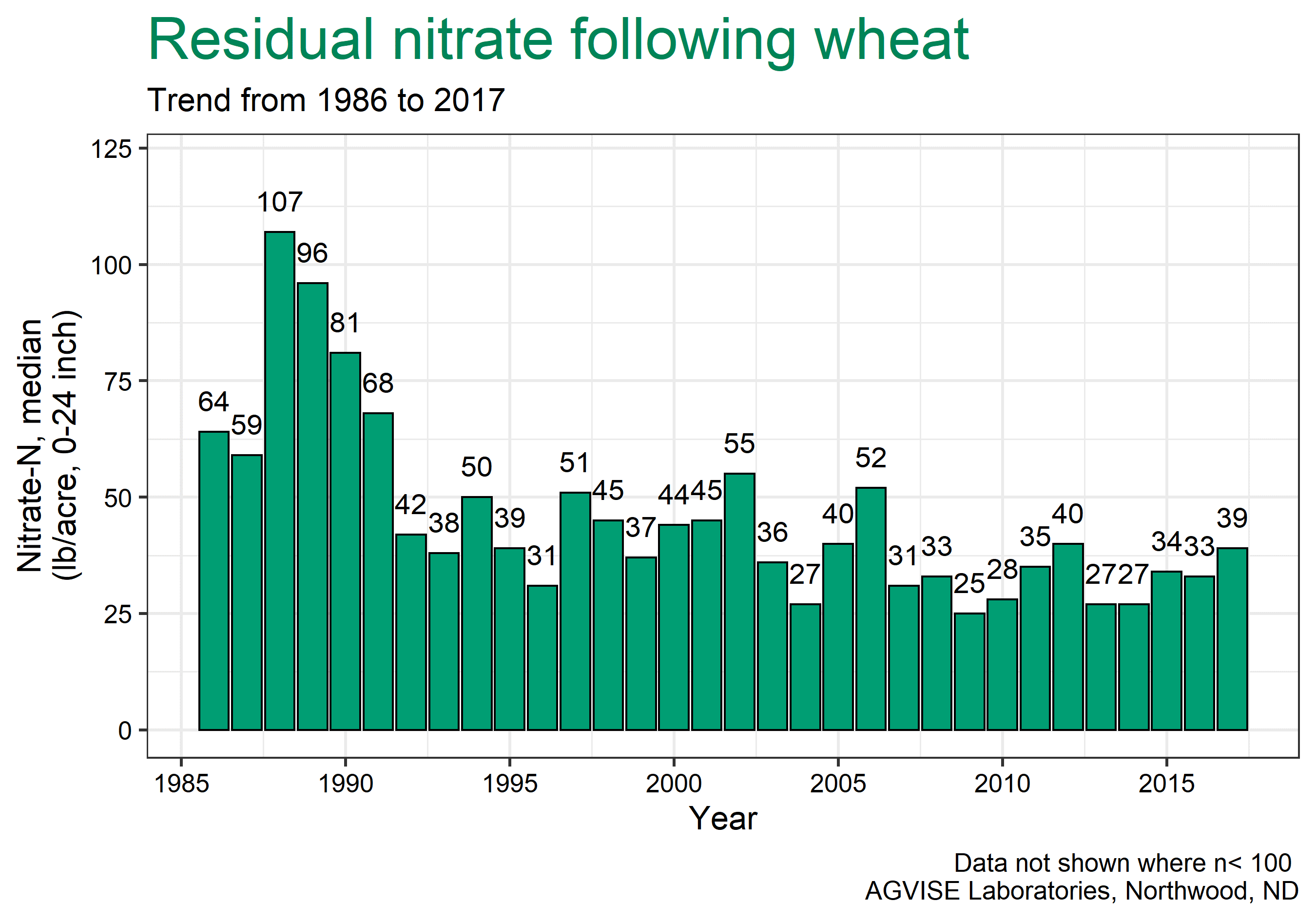
Figure 1. Residual soil nitrate-nitrogen following wheat on the northern Great Plains.
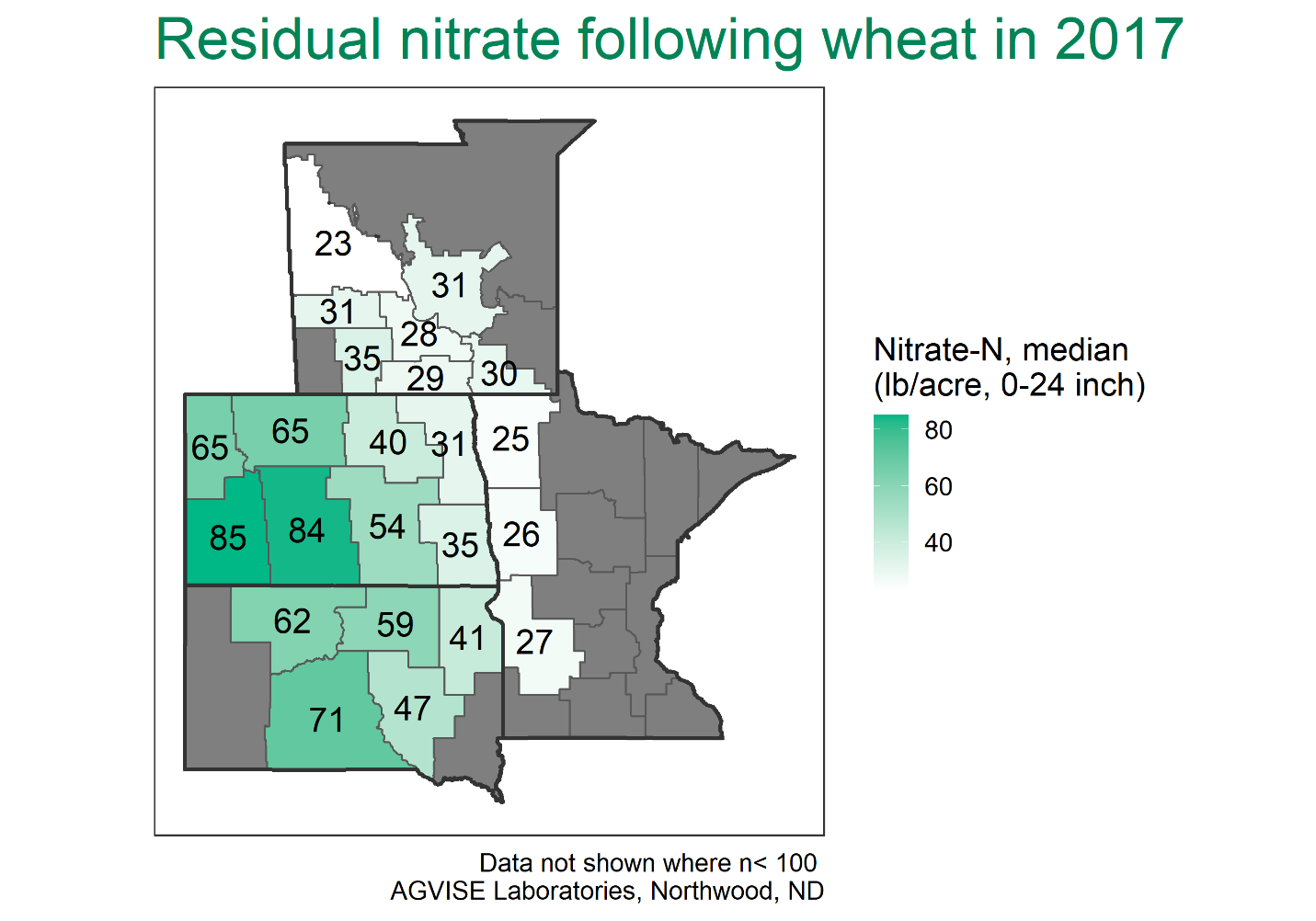
Figure 2. Residual soil nitrate-nitrogen following wheat on the northern Great Plains in 2017.
Following a drought, we often get the question, “Can I count on all the soil nitrate in my soil test for next year’s crop?” The simple answer is yes; you can count on the amount of soil nitrate-nitrogen in the soil test, but you must consider additional factors. Even in drought, some parts of each field will produce higher crop yield than other parts because the better soils have higher water holding capacity (e.g. higher clay content, higher organic matter). In the high yielding zones, there is less residual soil nitrate remaining in the soil profile. Drought will create more variability in crop yield and residual soil nitrate, mostly driven by topography and soil texture.
Let’s imagine you had a wheat crop severely affected by drought, but some parts of the field still had 50% normal yield (maybe lower landscape positions, greater water holding capacity). Following harvest, the whole-field composite soil test showed 140 lb/acre nitrate-N (0-24 inch). You were skeptical about that very high residual soil nitrate level, so the crop consultant resampled the parts with better crop yield, which then had 80 lb/acre nitrate-N (0-24 inch). Using the whole-field composite soil test result of 140 lb/acre nitrate-N (0-24 inch), you would only need to apply some starter nitrogen fertilizer for next year’s crop. However, if you only applied starter nitrogen, the high yielding parts of the field with only 80 lb/acre nitrate-N (0-24 inch) would be under-fertilized, costing crop yield and profit next year, on the best soils in the field.
If you only have a whole-field composite soil test result, you must consider spatial variability in residual soil nitrate across the field. You will want to apply a base nitrogen fertilizer rate to cover the parts with lower residual soil nitrate than the field average. The base nitrogen fertilizer rate may range between 30 to 60 lb/acre N, depending on spatial variability and risk tolerance. If you do zone soil sampling, you have a much better idea of spatial variability and nitrogen fertilizer needs in all parts of your fields. Through productivity zone soil sampling, you know the residual soil nitrate level in each management zone, and you can choose different nitrogen fertilizer rates across the field.
If you only soil sample the surface soil depth (0-6 inch), you are missing 75% of the plant-available nitrate-nitrogen pie. To make good nitrogen decisions, you should collect 0-24 inch soil samples for soil nitrate-nitrogen analysis. In drought, plant roots explore deep for stored soil water and uptake whatever nitrate is found along the way. There is no way to model how much soil nitrate remains in the soil profile after drought. Following drought, the best strategy is 24-inch soil sampling and breaking fields into several management zones to determine the proper amount of nitrogen fertilizer required.